The eyes are the most expressive features of the face, and the brows play an important role is this capacity. If brows are too low and heavy, or create prominent wrinkles above the nose, they create the impression of fatigue, worry, or anger. Perhaps your friends and acquaintances have told you that your eyes make you look concerned, mad, or exhausted when in fact you feel great. If your brows contribute to this false impression, then a brow lift will help you project a relaxed, refreshed look. The information below will give you an introduction to this effective procedure, and help you decide if a brow lift is right for you.

Types of Brow Lift
The latest type of brow lift to be developed is known as the “endoscopic” brow lift. This effective procedure begins with four or five small incisions in the scalp. The surgeon will then use small television cameras and surgical instruments to cut the attachments of the brows to the eye sockets, and raise them. Benefits of this procedure include scars that are hidden in the hair, minimal change in hairline position, and a reduced chance of numbness of the forehead.
Another type of brow lifts the “coronal” brow lift, which involves a longer incision in the scalp and the excision of scalp skin to pull the brows up. This approach allows the highest lift of the brows, but also raises the hairline and can lead to temporary numbness of the forehead.
A third type of brow lift involves an incision at the hairline of the forehead, and the removal of a thin strip of forehead skin to raise the brows. This leaves a scar at the hairline, but the scar is very well hidden by hairs that can grow through it. The hairline does not change either, and there is a good lift of brows with this approach.
During your brow lift consultation with Dr. Kabaker, you can discuss all of these procedures in more detail, and decide which is the best for you.
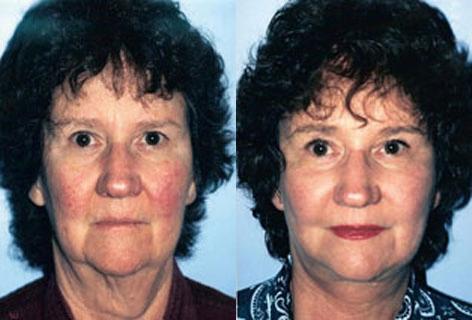
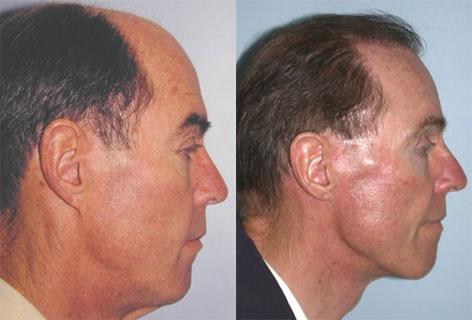
Eyebrow Anatomy
One important point about eyebrow anatomy is that the brows are tightly adhered to the top of you eye sockets, and this attachment is often what prevents brows from raising on their own. Also, as we age, the skin and muscle of the forehead becomes thicker and can sag down toward the eyes. In fact, when a patient has heavy eyelids, he or she will try hard to raise the lids by using the forehead muscles. This has the effect of making the forehead muscles grow, much like your arm muscles will grow by working them in a gym. These thick forehead muscles create thick wrinkles above the nose, and make the brows look heavy and low.
Suitable Patients for Brow Lift
Patients with low and/or heavy brows, and patients with deep creases between the brows, are good brow lifting candidates. Often, brow lift patients also have excess skin of the eyelids, and will have a blepharoplasty at the time of the brow lift. Ideal patients should also be in good health, and should be able to avoid blood thinning medications around the time of the surgery.
The Consultation
When you arrive at our office for a consultation, you will be asked to complete a detailed questionnaire about your medical and surgical history. Dr. Kabaker will then take standardized photographs and examine your brows and eyelids closely. Most importantly, you will be given ample time to describe your complaints, and to learn about your proposed procedure and how it might help you.
As mentioned elsewhere in this website, we stress patient education. So, during the consultation, you will learn a great deal about the anatomic considerations that cause your complaints, how they will be changed, what you will experience during the recovery, and your risks and alternatives to treatment. You will be given much information in writing, and we are always available for a second consultation, if you wish to review anything.
The Pre-Operative Process
For the two weeks prior to your procedure, you should refrain from using common medications that decrease your blood’s ability to clot, including aspirin, ibuprofen, Advil, Motrin, Bufferin, Naprosyn, and large doses of vitamin E. Our doctors will give you specific instructions based on your current medications. If you have any headaches or other pain, taking acetaminophen (Tylenol) is fine. You should also avoid smoking for two weeks before your surgery. The night before your surgery, you should eat a normal dinner but avoid all oral intake after midnight. This includes drinking anything, even water.
When you schedule your surgery, you will be given a detailed set of instructions that includes much more information. A copy of these brow lift Instructions is available for you to review now.
Your Procedure
If you have the endoscopic approach to your brow lift, your surgeon will make four or five short incisions in the scalp. Through these incisions, specialized television cameras will be inserted to view a magnified image of the surgical sites. Small surgical instruments will divide heavy connections between you brow skin and the underlying bone so the brows can be elevated to a more natural position. Heavy, thick muscle of the forehead will also be divided, to reduce creases above the nose. If you are having the coronal or hairline approaches, a thin strip of skin will be removed from the scalp or forehead, respectively. Then, in a similar manner to the endoscopic approach, the brows will be released and the muscle of the forehead divided. In all cases, the brows will be well secured in their higher position.
You will need to arrive to the San Francisco plastic surgery office about two hours prior to the start of your procedure. The entire procedure will take about two hours, and you will stay in our recovery room about one hour. Someone should be with you to drive you home.
Anesthesia
Brow lifts are usually done under deep sedation, which means you will be completely asleep and comfortable, but you will not need a breathing tube. A highly trained anesthesiologist or nurse anesthetist will by managing the anesthetic during the entire case.
Brow Lift Recovery
There is usually very only mild discomfort after brow lift surgery. Medications will be prescribed for you to control any pain you have. You will have mild swelling and bruising of the forehead and upper eyelids, which lasts about seven to ten days. Sutures placed in the incisions will be removed after five to seven days. You should be able to return to light activities after one week, but heavy exertion and exercise should be avoided for up to three weeks. You should be aware that your brows will be quite high immediately after surgery, but within a week or two they will settle to an appropriate and improved position. You will also have some degree of numbness of the forehead, which is normal and resolves when healing is complete.
FAQs about Brow Lift
If you have further questions about brow lifts, check the list below to find answers. While some information presented here is also contained in the above text, these short responses should complete your introduction to brow lifts. We also encourage you to consult with Dr. Kabaker individualized answers to all of your questions.
Am I a good candidate for a brow lift?
The best brow lift patient is in good health, a non-smoker, and is able to avoid blood thinning medications for two weeks before surgery. He or she has low and heavy eyebrows, and may be aware of looking tired, angry, or worried much of the time.
Can I have other procedures done at the same time as a brow lift?
You can, and often patients decide to have a blepharoplasty at the same time if they have excess upper eyelid skin as well. Doing multiple procedures on the same day does not lengthen the recovery time, and will allow the patient to accomplish many goals with one surgery.
Am I too young for a brow lift?
There is no lower age limit. Some patients have low brows at an early age which is often hereditary.
Can a brow lift improve my vision?
Some patients with low brows and excess eyelid skin can have trouble seeing to the sides because their vision is blocked by sagging skin. In these cases, elevating the brows (along with a blepharoplasty) will improve vision by relieving this obstruction.
Can a brow lift be covered by insurance?
Possibly. To be reimbursed by your insurance company, you would need to see an ophthalmologist first, to prove that your vision is actually affected by excess skin.
Will a brow lift give me a surprised look?
When done correctly, elevating the brows does not generate a surprised look. You will just look more refreshed and relaxed.
Can I achieve the effects of a brow lift by using Botox?
Botox can be used to paralyze the muscles that keep the brows low, allowing them to rise. This effect is mild, though – a surgical brow lift is much more effective at raising the brows. Also, the effects of Botox last only a few months, whereas the effects of brow lift surgery are generally permanent.
How many doctors should I consult with?
As many as you need to feel completely comfortable with the doctor you choose. Some patients are able to settle on their surgeon after only one consultation, while others require several to best compare their rapport with each doctor.
Do you use computers to change my pre-operative photos?
Yes, computer photo alterations can give you an idea of how your new brow position will look. Computer alterations are not very effective, however, at predicting the new appearance of the eyelids. In any case, altered photos will help you decide if surgery is right for you but will not guarantee a certain result.
Do I need to see my own doctor before a brow lift?
Basic lab tests may be required, and typically patients over the age of 45 require a written clearance from their personal physicians. All specific requirements are described in the attached Brow Lift Instructions .
What do I need to do the day before surgery?
The day before surgery, you should eat normally but avoid excessively heavy meals, or foods that can lead to acid reflux. Prepare your affairs so that you completely relax and rest after surgery. Most importantly, do not eat or drink anything after midnight before your procedure. See the attached Brow Lift Instructions for all suggestions.
Where does the surgery take place?
Procedures are done at the Aesthetic Facial Plastic Surgery Our Clinic, our fully accredited surgery center.
What kind of anesthetic will be used?
You will most likely be deeply sedated during the procedure, which means you will be completely asleep and comfortable, but breathing normally so no breathing tube is needed.
How long does the procedure take?
Brow lifts take about two hours to complete.
How much pain will I have after surgery?
Brow lift procedures do not lead to severe pain, but you will have mild soreness and tightness of your forehead. These symptoms are easily controlled with medications that we will prescribe for you. Approximately 10% of patients have headaches for the 24 hours after surgery that can be more intense.
What are the risks of surgery?
Adverse events are rare. One possible risk is permanent numbness of the forehead and scalp, which comes from nerve damage under the brows. Keep in mind that almost all patients have some numbness, but it is usually temporary. Your chances of permanent numbness are slightly higher with a coronal approach. Another possible risk is mild hair loss around the incisions. This risk is minimized with good surgical technique, and can easily be treated after your surgery. Other risks include possible infection, temporary headache, and mild bleeding.
Will I have scars?
The endoscopic and coronal approaches leave scars that are well hidden in your hair. The hairline approach leaves a scar at the top of your forehead, but hair will grow through the scar during the few months after surgery and make it very difficult to see.
How much time off should I take from work and exercising?
You should plan to take one to two weeks off of work, so swelling and bruising can resolve. Exercise should be avoided for about three weeks after surgery.
Do patients ever need another brow lift?
The benefits of brow lifts will last indefinitely, and revision surgery is quite rare. Occasionally, patients will want their brows raised even higher, which can be accomplished by revision surgery.