Contact Us


Message


captcha
 

View a collection of Facial Plastic surgery before and after photos to understand how this procedure can rejuvenate your appearance.
View More
 

Categories

  • Blepharoplasty
  • Botox
  • Browlift
  • Cheek Augmentation
  • Cheek Implants
  • Cheek Lift
  • Chemical Peel
  • Chin Augmentation
  • Cosmetic Surgery Recovery
  • Ethnic Rhinoplasty
  • Facelift
  • Facial Fillers
  • FUE
  • FUT
  • Hair Restoration
  • Hair Surgery for Women
  • Hair Transplant
  • Hairline Advancement
  • Hairline Lowering
  • Lip Enhancement
  • Midface Lift
  • Mini-Facelift
  • Neck Lift
  • Nose Anatomy
  • Nose Job
  • Otoplasty/Ear Surgery
  • Plastic Surgeon
  • Recovery
  • Revision Rhinoplasty
  • Rhinoplasty
  • Scar Revision
  • Septorhinoplasty
  • Uncategorized
  •  
    Eyelid Surgery


    Beware of Combining Herbal Supplements and Cosmetic Surgery

    May 13th, 2013 by

    Patients are generally aware that when their doctors ask what medications they are on, they need to disclose the prescription medications they are taking. What many patients don’t realize, however, is that it is vitally important to also disclose herbal and homeopathic medications and supplements as well. Dietary supplements and herbal medications are becoming increasingly popular, and patients often assume that because they are labeled as homeopathic or natural, they are safe. They do, however, have effects in the body, which is part of the reason they are so effective and so popular. It is also the reason they can be quite dangerous if your surgeon does not know what you are using before performing surgery.

    It is pretty widely known that medications such as aspirin and ibuprofen carry with them a risk of increased bleeding. But did you know that many herbal supplements can do the same? These include gingko, garlic, ginseng, fish oil, and Dong Quai, among others. These supplements should be avoided before and after surgery to ensure that you do not expose yourself to excess bleeding and bruising during surgery.

    Some supplements have effects on the cardiovascular system. These include ephedra, which can cause hypertension and palpitations, and garlic, which can cause hypotension.

    It is also important to know that many herbal supplements can interact with prescription medications. Some supplements known to have possible interactions include Echinacea, licorice, glucosamine, valerian root, St John’s Wort, and kava. Some of these can affect clotting agents. Others, which act as depressants, can not only cause interactions, but may magnify the effects of anesthesia. Due to the inherent risks of anesthesia alone, you want to be sure that none of your medications are going to cause interactions.

    If you are interested in setting up a consultation, contact Dr. Kabaker at his Oakland, CA, office at 800-914-4247.

    Recovering From Eyelid Surgery

    May 13th, 2013 by

    Eyelid surgery, or blepharoplasty, can have many benefits for patients with a variety of complaints. As the eyelids age, the skin loses elasticity and can become saggy. As it sags, the upper eyelid can sometimes become an impediment to eyesight, as well as creating a tired or aged appearance. An upper eyelid procedure can remove the excess skin. Lower eyelid surgery can remove or redistribute fat that has moved over time, which can help with the appearance of bags under the eyes. However, patient satisfaction is often contingent on understanding the recovery process ahead of time to avoid surprises.

    During your initial blepharoplasty recovery, keeping a low profile is recommended. A low degree of pain is normal, and typically it can be controlled either with prescription medication from your physician or sometimes with over the counter products. You may experience some blurred vision during the recovery process, so activities such as reading, driving, and watching TV may be difficult. For most people, return to normal activities such as work comes at around 2 weeks.

    Generally, your stitches will be removed after about 5 days. It is important that you follow your surgeon’s instructions regarding care of the incisions to keep them clean and avoid infection, as well as so that they heal optimally and leave the least scar possible. Just because the stitches are gone does not mean the incisions are fully healed, and you should continue to care for them according to your surgeon’s instructions.

    As with any surgical procedure, bruising and swelling are expected during recovery. The amount varies depending on a number of factors. You can keep your bruising and swelling to a minimum by keeping your head elevated after surgery, including when you are sleeping, and using compresses as directed by your surgeon. Bruising is usually mostly gone by the time you are ready to return to normal activity, and at that point you can usually use makeup to cover up any remaining bruising. Be sure to discuss any products you wish to use with your doctor to be sure they are safe.

    If you are interested in discussing the benefits of a blepharoplasty, contact Oakland facial plastic surgeon Dr. Sheldon Kabaker at 800-914-4247 to schedule a consultation.

    Present Thoughts on FUE in Hair Transplantation

    April 29th, 2013 by

    There is some over-response and hysteria to FUE marketing. Perhaps this should be described as very successful marketing. There is no question I realize that  HTN has to present this subject and the debate. By asking opinions of the subscribers you are doing the right thing. These are my present unedited thoughts and are not for publication on the Internet.

    FUE has become a very big player in the hair restoration surgery scene and should be openly and fairly presented. Here are some of my thoughts based on 40 years of having done almost every approach to hair and scalp surgery short of modern day FUE (I did do some  1 mm punch grafts in the early 80′s with minimal success).

    First of all, FUE should not be defined as an alternative to FUT. FUT stands for Follicular Unit Transplantation. This term covers the entire modern hair transplant procedure combining harvesting of donor grafting material and the creation of recipient sites- a total procedure. FUE is defined as a method for harvesting donor material to be used in a follicular unit transplantation procedure. Therefore to be anatomically and surgically correct we should not use the terms as competing alternatives. Maybe it is too late to correct this in the minds of the public.

    All this commotion and emphasis is on the donor area with little concern for the recipient area and the ultimate result bothers me. There has been a tremendous amount of effort to make the FUE graft as good as the average strip harvested graft . I know of a few surgeons who  have achieved the skills to harvest consistent high quality grafts. They usually have had to have 5-10 years of experience and then are becoming too fatigued to routinely extract the 2000+ grafts/ day that has become the average transplant session. These surgeons deservedly charge a premium for their work.  Anyone looking for a cheap FUE procedure will likely get a poor result.  Also many FUE proponents are harvesting grafts outside of the “safe” areas for long term survival. Many of us hair surgeons are being pressured to offer FUE and do not have the experience or expertise to harvest high quality grafts unless we employ surgeons or technicians who can do this harvest work. This would add even more cost and it is essentially illegal in California for anyone other than a licensed physician to cut the skin.

    The  ARTAS  robot  (artashair.com/)  seems to do a reasonably consistent job of harvesting FUE grafts but the surgeon has to learn to operate this fascinating  high tech machine and must be be operating with the use of at least one assistant and often has to spread the work of one graft session over a 2 day period. The cost of acquiring and operating this machine greatly raises the cost of producing a graft, and the robot presently only does the harvesting part of the hair transplant.  My contacts with colleagues indicate that those who have experience with strip harvests and have used  the robot state that the robotic FUE grafts are good but not as good as strip harvested grafts. Other harvesting devices are dependent on the skill level of the harvesting surgeon or technician. All these approaches are to try to get grafts as good as most of our experienced and skilled hair technicians can make routinely and economically with the tried and true strip harvest.

    I understand that the robot may soon be able to make recipient sites. This sounds very exciting if it does as well as other approaches but again, this automated surgery has to be done by the physical presence of the surgeon and the cost has to be even more.

    This FUE craze is promoted to avoid a linear donor scar which would show as a white line on a completely shaved head. If the donor area is of such concern, we are admitting the ultimate failure of a transplant. If one wants the shaved head look why even consider a transplant? Also, who has seen the shaved head appearance on someone who has had 5000 or more FUE grafts harvested? The only examples I have seen are on a repeat FUE (second) session wherein the hair was shaved down showed multiple white circular spots that would prohibit the wearing of a shaved head style. In this day and age where patients receive 5000-6000 follicular unit grafts in their lifetime, the donor area would have to be covered by hair growth , the same as with a strip harvest , in order to look natural and undetectable.  Has anyone seen a long term shaved head after 2 or 3 FUE  sessions? Also we do not  know the damage that can be done to the donor area in regards to remaining follicular units. Does the public realize that everyone who has had a facelift has hidden scars in the scalp that would show with a shaved head?

    Admittedly there are bad linear donor scars from over 30 years of FUT with linear strip harvesting. Most were the result of inexperienced surgeons in days past doing aggressive work and did not follow the principles of plastic surgical wound closure. So, too, we will see damaged scalps from all the novice FUE surgeons. Already that is happening especially in regards to poor growth in recipient areas.

    An excellent and very fair article on FUE has been published  on the Hair Transplant Network by my friend and colleague,  Ron Shapiro M.D. From Minneapolis. Dr. Shapiro, in my  opinion , has been THE  leading teacher and thinker in hair restoration surgery in the past 20 years and continues to be in the forefront of thought and technology.


    How to Find a Plastic Surgeon

    April 23rd, 2013 by

    Have you been thinking about a cosmetic procedure? Maybe a particular feature, such as your nose, has been an area of concern for your whole life. Or maybe you have just recently noticed wrinkles developing and you want to learn more about injectables to head them off. No matter how small or large your desired procedure is, it is very important to find the right physician.


    It is, of course, very important to find a surgeon who is qualified and well educated. You want someone who has experience. It is just as important to find someone you feel comfortable with as this is an important factor in ensuring that you and your surgeon are on the same page. You have to be able to freely discuss your desires and expectations and be comfortable with and trusting of the answers you receive. It is recommended that you schedule appointments to consult with physicians you are considering, and if you are not fully comfortable, try someone else.


    Put some effort into learning about your surgeon’s qualifications. Your surgeon should be board certified in facial plastic surgery or plastic surgery. Sometimes, physicians in other specialties will do cosmetic procedures, but it is best that you find someone who truly specializes in what you want to do. Dr. Kabaker, for instance, is certified by the American Board of Facial Plastic and Reconstructive Surgery , and he has particular expertise in hair restoration.


    The procedure should also be performed at an accredited facility. Most cosmetic procedures these days are performed in outpatient surgical centers. Make sure that the one you are visiting is up to date and accredited. This will tell you that it has been inspected and is equipped to handle any emergencies that might arise. We have been surveyed and accredited every 3 years since 1991.


    Ask to see before and after photos of other patients who have had the procedure you are interested in. You want to see that your surgeon has performed this procedure many times with good results. As a side benefit, this will help you get a better idea of what your results may look like. We can show you many more examples in the privacy of the office than we can post on the website. We follow a strict privacy policy and most patients who allow us to show pictures in private will not consent for their photos to be posted on the Internet. Also, with computer imaging we can show how your surgery result can look using you own images.


    If you are interested in a consult to see if Dr. Kabaker is a good fit for you, contact his Oakland, California, office at 800-914-4247 to schedule an appointment.


    Can My Scar Be Removed?

    April 23rd, 2013 by

    Many people have scars resulting from a variety of traumas. It is common for people to feel self conscious about their scars. When a wound has had difficulty healing or a surgical incision is not closed properly, a more significant scar may result. Although it is never possible to fully erase a scar, plastic surgeons have methods to minimize their appearance.


    Most commonly, scar revision is performed in situations of bad healing. One type of troubling scar is called a keloid. A keloid forms when scar tissue grows excessively, and continues to grow over time. The resulting scar is often thick, off-colored, and extends beyond the actual wound. Scars can also cause trouble in other situations. A scar can be normal, but if it is at an angle opposing the tension lines of the skin, it can limit mobility. Functionality of the tissues involved can be impaired in other ways as well, which is a common reason to seek scar revision.


    Again, it is impossible to completely erase a scar. The scar is formed because the natural skin has been broken, and this cannot be undone. One common way to minimize the scar is to reopen the wound, close it and ensure that it heals better than the first time around. This is often done if the scar is particularly overgrown or raised. In the case of keloids, the entire scar must be removed, as the scar will continue to grow over time if it is not excised. Plastic surgeons are practiced in techniques of wound closure intended to minimize scarring, and when they reopen and reclose a scarred wound, the resultant scar is likely to be smaller.


    In the case of a scar which is discolored or unsightly but less severe than those discussed above, a different type of treatment may be appropriate. Skin resurfacing treatments such as dermabrasion remove the top layers of skin, allowing smoother, more even skin to surface underneath. This is often very effective in reducing the visibility or discoloration of scars.


    If you are interested in discussing an undesirable scar and how its appearance might be improved, contact Dr. Kabaker’s Oakland office at 800-914-4247 to schedule a consultation.

    Recovering From a Facelift

    April 18th, 2013 by

    For a true, extensive and permanent improvement in the look of your face, a traditional surgical facelift is often the best option. However, as with any surgery, it is not without its downsides. There is recovery time involved, and the benefits are not immediately fully realized. For maximal satisfaction with your procedure, you should be sure to understand the recovery process so you are not surprised.

    The initial recovery from a facelift will take 1-2 weeks. Most San Francisco patients plan to be off from work for about 2 weeks. Immediately after surgery, you will experience some discomfort, although this is minimal for most patients and is usually controlled with over the counter medication. For the first few days, swelling will increase, peaking around day 5. To minimize swelling, be sure to follow your surgeon’s instructions regarding compresses and keeping your head elevated. After day 5, swelling should decrease fairly quickly.


    You should limit your activity for the first 3 weeks, avoiding exercise or heavy lifting. If your job requires a lot of activity, you may want to build in extra time off. Too much physical activity can cause trauma to healing tissues, delaying full recovery and possibly changing the way your face heals. Bruising is common and typically is concentrated on the lower face. As with swelling, compresses and keeping your head elevated may help. Bruises may persist beyond when you are feeling better, but can usually be covered up by makeup by the time you are ready to return to your regular activities.


    Your surgeon will provide you with detailed instructions for post-operative care. These will include compresses, what pain medications to use, keeping your head elevated, how to clean your face, and more. It is important that you follow all instructions to ensure the best and fastest recovery you can have.


    If you are interested in discussing a facelift to improve your look, contact facial plastic surgeon Dr. Sheldon S. Kabaker of Oakland, California, at 800-914-4247 to schedule a consultation.

    Covering Up Bruising After Eyelid Surgery

    April 18th, 2013 by

    After cosmetic surgery, San Francisco patients are often anxious to get out of the house and return to their normal routine. However, healing from surgery does take time, and there are often side effects like bruising and swelling during the healing process. Although swelling subsides fairly quickly, bruising can last longer and you may find it limits your social activities. With good cosmetics, it can be covered up and camouflaged as soon as your physician tells you it is safe to use make-up products.


    Generally, it is possible to resume cosmetic use in roughly a week to ten days after surgery. This gives time for initial healing of incisions, removal of sutures if necessary, and for most of the initial swelling to subside. This is also around the time that it is recommended you resume regular activity. It is, of course, important that you follow your physician’s instructions regarding post-operative care, and you should ask specifically about when it is ok for you to use make-up. It is also very important to avoid using any make-up on any open wounds as this can cause infection.


    If you experience severe bruising, camouflage products may be best for you. These are designed to cover up anything, including tattoos, so they are powerful. Brand names include DermaBlend and Cover FX, and they can be found at most department stores or online.


    Bruising that is less intense can be covered up with a simple concealer product. To achieve optimal coverage, choose a concealer color opposite the color of your bruising, i.e. for redness use a green concealer and for purple bruising use a yellow concealer. Over this you can use normal makeup. You will also want to avoid metallic eye shadows as these can enhance and draw attention to pores and imperfections. Stick to simpler, more natural looks to show off your new appearance.


    If you are interested in discussing an eyelid lift procedure for yourself, contact facial plastic surgeon Dr. Sheldon S. Kabaker of Oakland, California, 800-914-4247 to schedule a consultation.

    Aging of the Lower Face

    March 27th, 2013 by

    Are you experiencing aging around your mouth and lower face? Of course all areas of the face are affected by the aging process, but the treatments for different regions may vary. Here we will discuss the issues and treatments specific to the lower face.

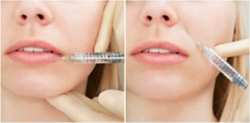
    One very common complaint for patients is that their lips have thinned and lost volume over time. This commonly happens as the fat under your skin redistributes as you age. Volume is most commonly added to the lips through the use of fillers. These include hyaluronic acid based fillers such as Juvederm and Restylane, collagen, and synthetic compounds.

    Around the mouth, people often also experience smile lines or parenthesis lines. These occur due to the creasing of the skin when muscles around the mouth contract repeatedly over time, ultimately creating a permanently creased appearance. Loss of skin volume can also be a contributing factor. Treatment of these lines is similar to the treatment for loss of lip volume. Fillers can be injected directly into the wrinkles. This replaces the lost volume and refills the wrinkled area, decreasing wrinkle visibility. Fillers can be a very effective treatment, but unfortunately are not permanent and must be repeated periodically to maintain the results.

    The skin of the face also loses elasticity and sags over time. This leads to sagging around the jaw and neck. Patients often complain of this decrease in jawline definition and of the undesirable appearance of the extra skin in the neck. Treatment for this more general aging symptom is most commonly accomplished through a face or neck lift. There are many types of face lifts which target different areas. The common goals, however, is to isolate the layers of soft tissue of the face, elevate them, and remove any excess tissue to tighten up and rejuvenate the face.

    If you are experiencing aging of your lower face and would like to see how you can renew your appearance, contact Dr. Kabaker’s office at 800-914-4247 to schedule a consultation.

    Asian Eyelid Surgery

    March 26th, 2013 by

    People of East Asian descent have eyelids that do not have a crease whereas the eyelids of most other ethnicities do. It is not uncommon for Asian Americans to seek surgery to alter their single eyelids to have a crease. This is a specific type of blepharoplasty (eyelid surgery) known as double eyelid surgery or Asian eyelid surgery.

    The eyelid crease is caused by the eyelid skin being connected to the underlying muscles that lift the eyelid. This connection is lacking in Asian single eyelids. The surgeon corrects this by inserting sutures inside the eyelid, connecting the lid to the underlying muscle. These sutures allow the eyelid to crease and act like the double eyelid typical of other ethnicities.

    However, it is important to keep in mind that this procedure should not be performed on the basis of desiring a more Western appearance. As a patient, you should be sure that you desire the procedure based on a well-founded belief that it will improve your own appearance. Many patients having a double eyelid procedure are looking to have their eyes appear more open, which can be enhanced by adding a crease. This type of surgery can also be used to correct asymmetry between the eyes. It is important to find a physician who is focused on you as an individual and what your goals are for the surgery, and is not pushing a Western look on you.

    As with any surgery, it is important that you consider all the risks and benefits before undergoing the procedure. You should carefully follow your surgeon’s instructions for before and after surgery. You will probably be instructed not to smoke or take blood thinning medications. You should be prepared for the recovery to be involved, which is generally 1-2 weeks for this type of procedure.

    If you are an Asian American and are interested in a double eyelid surgery, contact Dr. Kabaker’s office at 800-914-4247 to schedule a consultation.

    Caring for Your Radiant New Skin Post Chemical Peel

    March 7th, 2013 by

    Chemical peels are a common and effective treatment for a variety of skin issues. They can reduce lines and wrinkles, smooth out rough skin, decrease the appearance of dark spots, and create a more even skin tone. However, the success of these treatments does somewhat depend on what you as the patient put into the care of your skin following the procedure.

    Chemical peels involve your physician applying a treatment of an acid solution to your skin. This solution soaks in and, over the recovery period, causes the outer layers of your skin to peel off. Underneath this, smoother, younger looking skin is exposed.

    After the peel is applied, it is very important that you treat your skin very gently. You want to keep the old skin in place as long as possible since it acts as a natural bandage for the new skin healing below. To do this, you should be very careful to keep the skin from drying out, including applying moisturizer many times throughout the day. Keeping the skin from drying out will also help avoid the tightness, cracking, and stinging that can occur during healing.

    Your physician may give you a special cleanser to use to clean your face. It is important to use this gently, dab it on to your face instead of rubbing, and rinse by splashing water on your face. When you are showering, avoid standing with your face directly under the showerhead. Dry your face by patting carefully and gently with a towel.

    It is also important to avoid sun exposure. Your physician will tell you when it is safe to apply sunscreen. As long as the skin is peeling, however, it is best to stay out of the sun as much as possible. If you are outside, wearing a wide brimmed hat is advisable.

    If you’re interested in learning more about chemical peels, contact renowned facial plastic surgeon Dr. Sheldon Kabaker of Oakland, California, today at (510) 451-1116.

    Page 1 of 4212345...102030...Last »